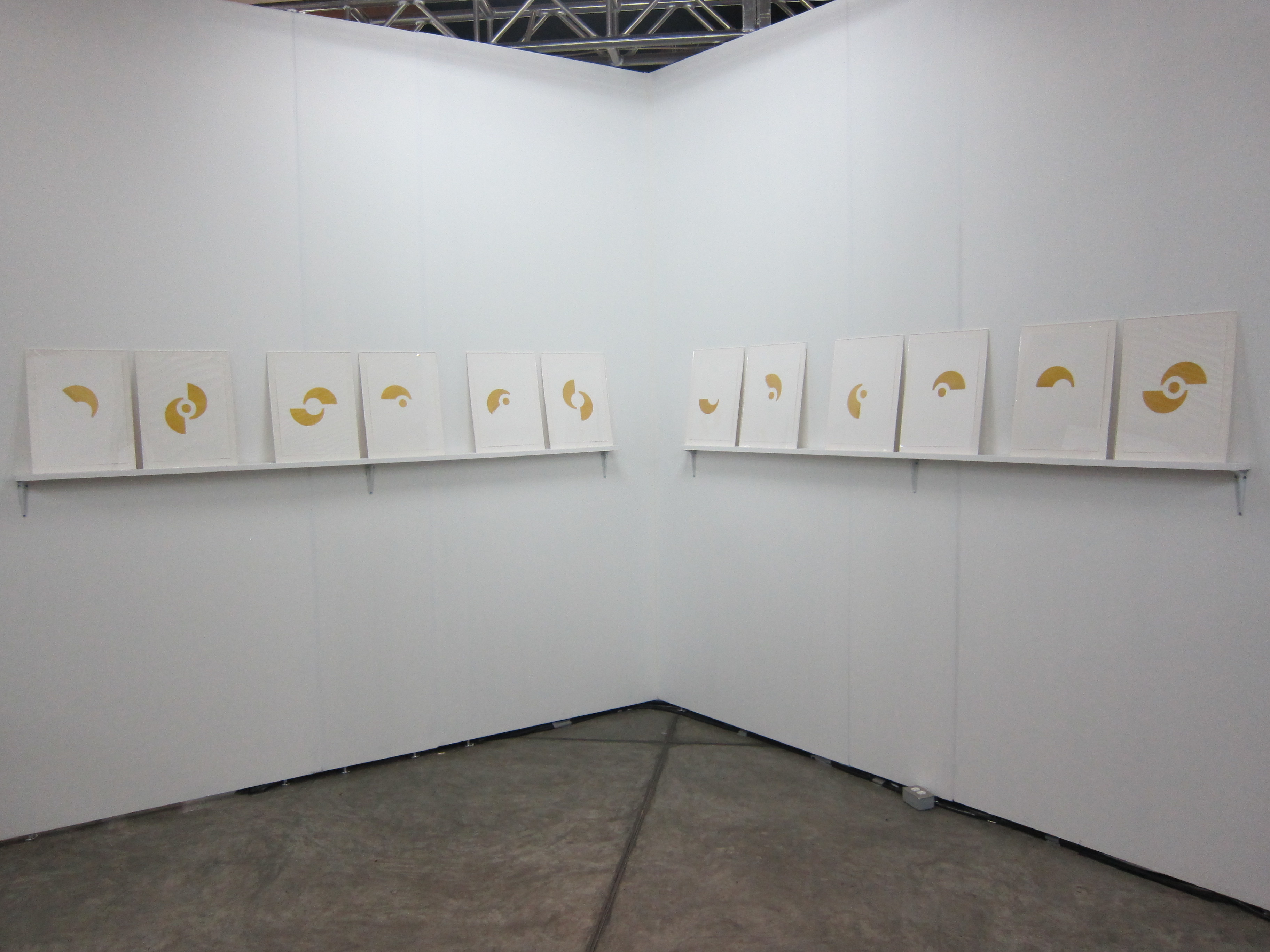
Talking _/)_s Into Existence
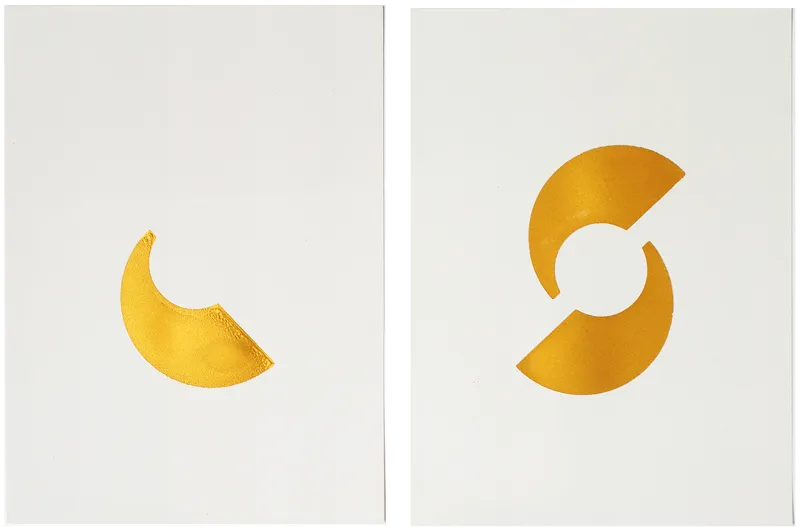
Language is a builder's trade.
In her 2009 essay "Words About Architecture," architect, teacher, and writer Denise Scott Brown wrote:
Charles Seeger, philosopher of "musics", believed that art, music and architecture cannot be explained in writing, because words are linear and hide the essence of the arts that are nonverbal and nonlinear. Stravinsky, too, when asked the meaning of a composition just played it again. But then what were Seeger and Stravinsky doing, and what am I doing writing words? … Can the nonlinear arts help each other? Can we best describe a building by writing music? My argument with Seeger is that words too, especially poetry, have vast nonlinear dimensions through the layers of association they evoke, and that these can be primary sources for creativity in architecture. … Creative cycles call for reading, thinking, impassioning, then sleeping and opening a new book. There need be no preconceptions. The world can start again on a white page. … As the design evolves, the words return again in altered form.11 Denise Scott Brown, "Words About Architecture," in Having Words (London: Architectural Association, 2009), 145, 153.
That words return, altered, as nonverbal forms evolve, is true not only in the sense demonstrated by Brown's own writing about architecture across several decades, but also in the literal, physical sense that words change shape over time. Language is a builder's trade. The concept of distinguishing between verbal and nonverbal forms itself only evolved via language over hundreds of years, in tandem with writing.
In ancient Sumerian—the language originally spoken in southern Mesopotamia, now Iraq—the word for door, ig, had a syllabic value. It could be combined with other words to create openings, much like the way a door can be added to a wall. For example, munus, the word for "female," plus ig, produced mug, meaning "female genitalia" or "nakedness." The word for "eye" was igi, roughly ig + ig, presumably because there are two of these doors right next to one another on a human face. The word for "side" or "edge," úz, added to ig produced zi or izid, a word for "wall," particularly a partition or interior wall—as opposed to an exterior, fortified wall, bad, a more commonly used word that predated zi by half a millennium. Oddly, the phrase igi bad meant "to open the eyes." An alternate meaning for bad, which was a highly flexible term, it seems, was "to open" or "undo," rather the opposite work of a wall—more the job of a door, at least historically. Some four millennia since igi bad has meant anything to more than a handful of linguists, a wall can be a window can be a door. Within the relatively brief period of Scott Brown's architectural career, glass and steel have assimilated the three. If ancient history is any indication, our language, too, will follow suit; and if recent history is any indication, the process won't take half a millennium this time.

Historically, the birth of a new language was an arduous drama played out in slow motion over what may as well be units of geologic time compared to the scale of an individual human lifespan. Today, the process can be practically instantaneous, as in the case of a computer language, when a given linguistic anatomy fully integrates a new technology. In fact, technological change has consistently catalyzed language change. Written phonetic languages descended from complex, nonstandardized pictographic systems in which individual signs represented single concepts or things rather than sounds—though these "systems" hardly warrant the designation since they weren't initially systematic. Only as technologies of inscription evolved and literacy increased accordingly did it become necessary to make pictography more expedient in order to meet the booming demand for written words. Still, contemporary written languages, in which symbols represent sounds rather than ideas, were conceived almost inadvertently. Design followed inception.

The first known instance of a pictograph used to represent a sound instead of a concrete object occurred in Mesopotamia, when a scribe attempted to write the expression for a Sumerian god called "Enlil, the lifegiver," a phrase pronounced Enlil-ti. Instead of writing the pictographic signs for the two words, the scribe wrote the sign for "Enlil" followed by the sign for "arrow," which was a homonym for "lifegiver"—both words were pronounced ti. Graphically, the phrase "Enlil-arrow" would make no sense, but read aloud as Enlil-ti, it could be understood. Thus, ti became the first syllabic sign.

From syllabic systems, in which signs represent groups of sounds, phonetic systems, in which signs represent single sounds, were derived. That is, written language began as an unruly, expandable set of graphically complex symbols that utilized concrete relationships between signs and referents to convey meaning. The atomized, phonetic system by which this essay is written consists of a fixed set of far fewer, far simpler symbols that refer only to sounds in spoken language, but permit vast possibilities for both precision and abstraction in linguistic representation relative to a pictographic system. We might then conclude that, when it comes to written language, the more economical the system, the more efficient. But this assumption holds only within a specific speech community—readers of a phonetically written language must necessarily be speakers of that language since the sounds of speech are all that a phonetic sign system denotes.

To compare: a few eons ago, in what is now China, someone drew a stick-figure horse to represent the concept "horse." Today, the same proto-Chinese horse sign can be readily understood by readers with no prior exposure to proto-Chinese. However, it is not possible to deduce from the picture-word the pronunciation of the original spoken word. The horse sign embeds its referent's meaning, but transmits nothing of the word's sound. A pictograph can carry a message through time without necessarily bearing language along with it, which leads us to wonder about possible relationships between time and signs, not with regard to the inevitability of linguistic change, but instead with a broader regard to the fundamental resilience of signs. In other words, rather than asking the etymological question, "What is the true meaning of a word as it changes over time?" we might ask, "What signs or qualities of signs remain significant over time?" In Scott Brown's words, this is like asking, "What are the nonverbal, nonlinear qualities of language?"

Sumerian was eventually replaced by Akkadian, which incorporated some Sumerian characteristics, though it was a syllabic system, derived from Phoenician, like Greek. It is not by coincidence that the Akkadian word for "door," daltu, represented by a triangular symbol, closely resembles the Greek letter delta, though delta doesn't mean "door." Greek was never a pictographic language (no direct relation to Sumerian), but "delta" did come into use much later (and is still in use) as an English word referring to the mouth of a river. This is a result of the formal correspondence between the geographic element and the triangular shape of the Greek letter, which bends "delta" around to the condition of a threshold, at least in modern terms—just as it bends English around to Akkadian, and the Greek alphabet around to pictography, though these latter feats require more stretching. Therefore, pursuant to ancient Greek standards for etymological research, which were synchronic ("with time") as opposed to diachronic ("through time"), door, daltu, and delta are indeed related, if only here, only now, and only according to this narrator. That is, the future presently reinflects the past, unpredictably, albeit conveniently, at least in terms of ready-made associations among ostensibly dissociated words, doors, triangles, and epochs. Incidentally, the Sumerian symbol that the Greek delta closely resembles—a triangle positioned on point like a downward arrow cleft by a vertical line—was the sign for "woman," a figure that corresponds perfectly with a diagrammatic satellite view of the Nile delta.

To speak of nonverbal forms as expressing linguistic attributes or following linguistic principles in their formal evolution is a commonplace. How often we hear about the "language," the "vocabulary," or the "grammar" of dance, cinematography, even toothpaste packaging. That nonverbal forms communicate and evolve among "literate" communities in ways that are analogous to language is evident, as is the fact that one can be more or less literate in a nonverbal "language." Nevertheless, the analogy has its limitations, which have something to do with the conceptual confrontation between a proto-Chinese horse and a Sumerian ti.

The potential accuracy of any formal analysis corresponds to the degree of systematization of whatever is being analyzed. A highly systematized form like a language can be analyzed with relative precision compared to less systematized forms like building façades or handmade pottery, as Scott Brown and her students discovered when they analyzed the architecture of Las Vegas in the late 1960s and '70s. Yet, the physical form of a vase (if not a façade) has proven more stable, and certainly more universal, than its various linguistic signs. And the phonetic sign has ultimately eluded neither pictography nor poetry (as the case of the delta illustrates), despite all ambitions to the contrary. In other words, pottery, like poetry, is resilient despite apparent fragility, and a door is a word we understand but don't know how to say.

A dying language typically suffers a long decline through several generations of decreased use and neglect. A population of speakers devolves into a shrinking community of semi-speakers, until the last of these, too, finally disappears, and the language passes away in quiet, almost unnoticed. Ancient Sumerian lingers as a specimen of study because it was reserved for use by a ruling class well after Akkadian supplanted it, and because it was written in stone, like an ancient building. Abiding the immortal words of contemporary poet and philosopher of "musics" Jay-Z, who maintains that he "speaks things into existence,"22 Jay-Z, Decoded (New York: Spiegel & Grau, 2010), 33. a tongue that creates, persists. For the Sumerian scribe, the same was true of the writing hand.

Words have been sounds as long as they've been words, but writing was drawing until perhaps 5,000 years ago when a pictographic arrow pronounced "lifegiver" simultaneously adjoined and separated nonverbal and verbal language. Will words set in bits prove more pliable than those written in ink? (Are words written in ink more mutable than those set in stone?) The opposite may be true. Certain words have transcended time and the rise and fall of civilizations.
The English word "wall" sounds a lot like the proto-Indo-European walso, which meant "a post," and the Latin vallus, also meaning "post" or "stake"—though English is a Germanic language. The Italian and French versions, muro and mur, appear to have descended just as directly from a different Latin word, murus, which meant "wall" as in "protection" or "defense," more like the Sumerian word bad. Other proto-Indo-European words meaning "to cover" and "to form" engendered the ancient Persian word for wall, değa-vâra, and, later, the blatantly compressed Persian word for wall, dîvâr. But spend a few minutes online translating the word "firewall" into other languages and notice how many cultures and languages import the English term unaltered. What does "firewall" mean? It's a portmanteau that in current usage most often has nothing to do with either fire or walls, rather the inhibition of communication. Though the word originally referred to a physical wall built to contain the spread of fire, it is now best known and most widely used in reference to software that thwarts unauthorized agents from accessing information stored on networked computers.

Firewall's ubiquity across languages, the fact that it supersedes other longstanding, local renditions of "wall," is testament to one present outcome of an ongoing contest between technological speed and cultural mass in linguistic evolution: populations of semi-speakers are emerging simultaneously within many different speech communities, globally. If the "vast nonlinear dimensions" evoked by words persist only to the extent these dimensions (like words, through words) are continually spoken into existence, and if design evolves as words return in altered form, then the layers of association found within both poetry and doors will (or already have begun to) merge accordingly.

Incidentally (or not), the advent of a global Internet has given rapid rise to a new system of pictographic symbols: typographic signs used as elements of images (rather than as phonetic or punctual cues). The first emoticon appeared in 1982, when a computer programmer posted a suggestion on an internet bulletin board that a colon followed by a dash followed by a closing parenthesis be used to signal that a preceding statement should be interpreted lightly. The string of signs " :–) " cannot be read aloud, but the message has already traveled farther in thirty years than a stick-figure horse did in several millennia.