Kettle Megalith Jerrycan
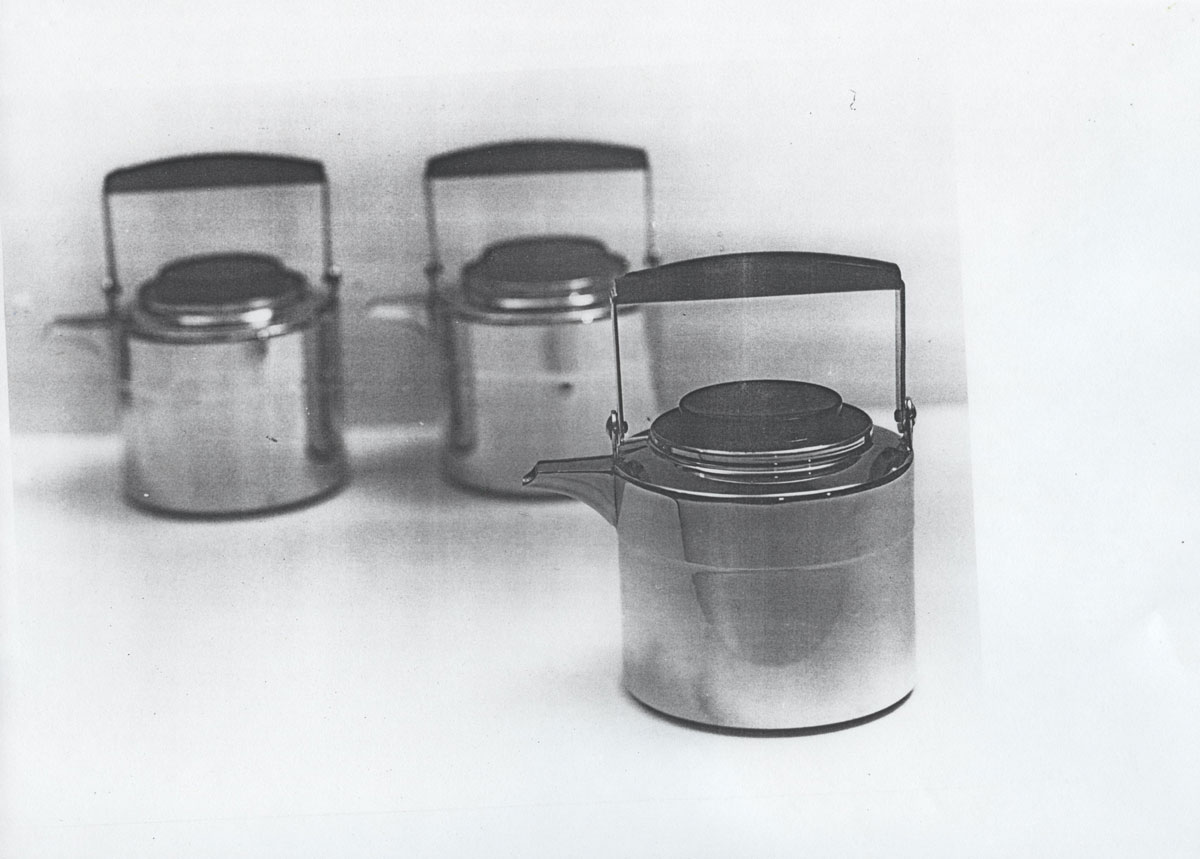
Imagine gripping the supposedly insulated handle of your shiny new kettle while making your morning coffee only to discover by the painfully singed skin of your tender palm that the thing has been poorly designed, failing in one of its key functions and causing you, its user, physical harm.
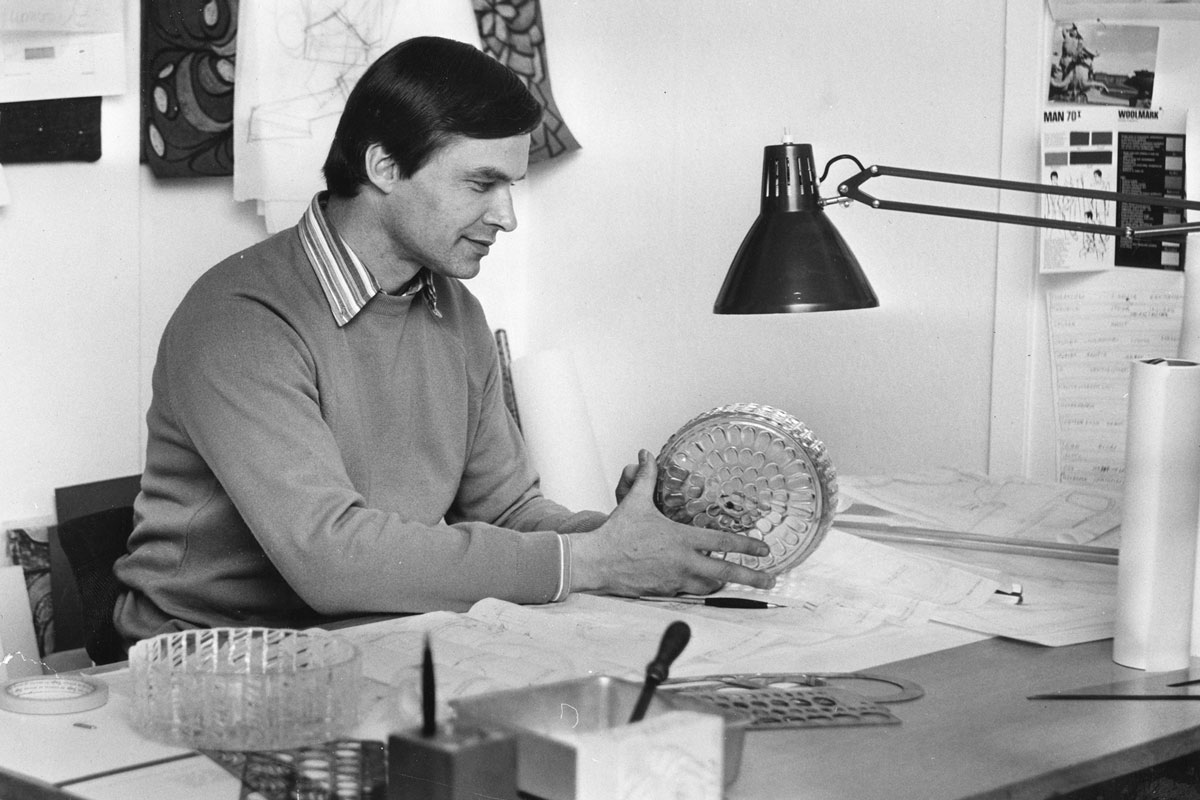
You abandon your breakfast, jump into your car, still-steaming kettle in now-blistered hand, and speed through a fearsome thunderstorm straight to the manufacturer's headquarters. Arriving there, you flash your lights and honk your horn until a reluctant security guard finally waddles out to inquire, at which point you explain in exasperation that you have come to redesign the pot. When you refuse to leave, the guard calls his manager, who contacts someone else who contacts someone else, and after some minor back and forth, during which your identity as an esteemed product designer is revealed, some decision-maker-or-other emerges from the building (the storm clouds have receded by now) and strides over to grant the commission right there in the parking lot. "You must be heaven sent," he cries, "because the board decided just this morning that thing should be remade!" You accept the job with a firm handshake (how business was done back then), and, some months later, the wider world is relieved of one more malfunctioning kettle when your new and improved, non-singeing version usurps the other's retail shelf space.
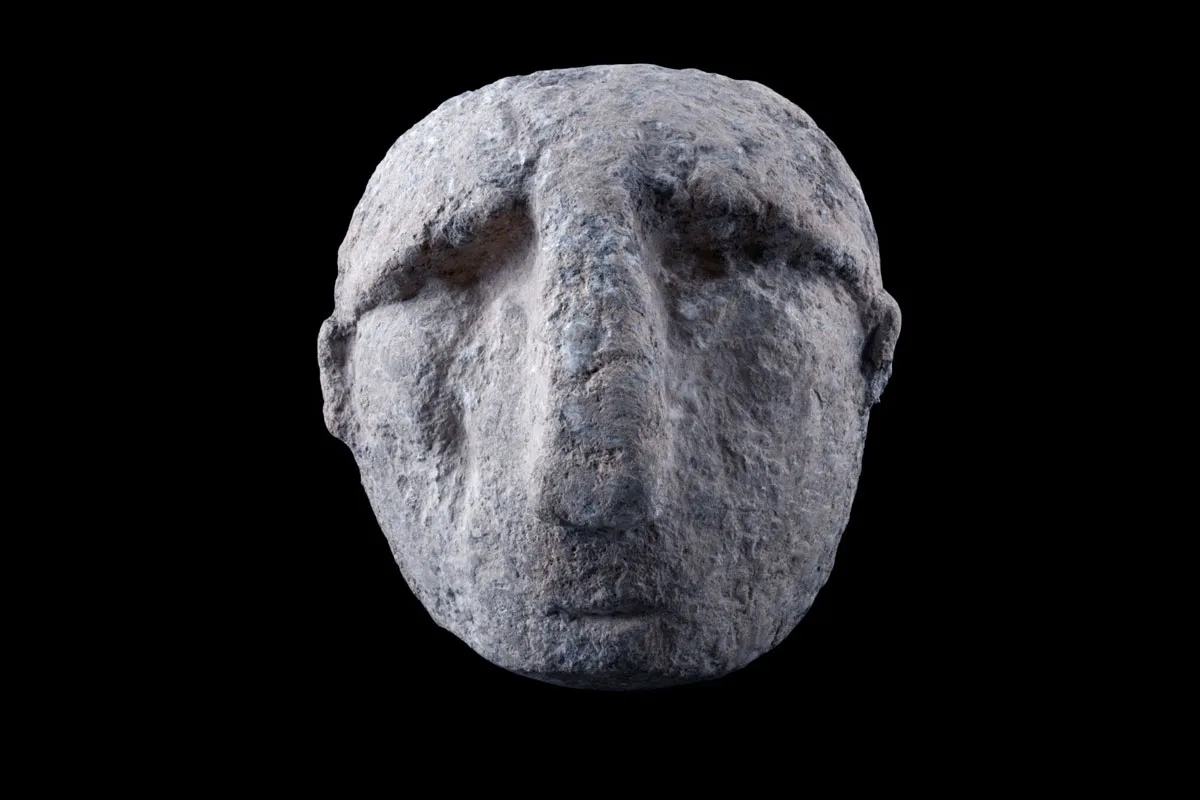
Fifty or sixty-odd years later, archaeologists begin to unearth an extensive neolithic site of apparent gathering, worship, and habitation located in southern Anatolia near the Syrian border. The settlement, called Karahan Tepe, is believed to be up to 13,000 years old, predating the development of agriculture by more than a millennium. The entire complex, including large communal chambers, housing, and channels for water circulation, was evidently formed by excavating limestone bedrock with handheld stone tools. That is, every structure comprising the site—every architectural volume, every pillar, every bench, every stair—was created by people equipped with nothing more than sticks, stones, and bones, which they used to chip away at solid rock, millimeter by millimeter, day after day, for generations, until they had chipped and modeled an immense temple and town. In this sense, the place was not so much constructed by its makers as it was revealed, a process requiring an organized, collective effort spanning perhaps two centuries or more, which was managed without the benefit of written language, mathematics, or the wheel. For reasons unknown, the settlement was deliberately buried in dirt and rubble at some point, a fact archaeologists have deduced by analyzing the fill covering the site, which was systematically composed; as well as noting the presence of various objects arranged on the protruding perimeter benches of the main temple structure, objects which appear to have been placed ritualistically, as in an act of entombment. Thus far, a mere 1% of the site has been exhumed, yet the excavation effort has already uncovered 250 T-shaped carved stone megaliths, many decorated with complex designs depicting animals and human figures in what appear in some cases to be scenes of hunting and in others to be scenes of predation and in yet others to be scenes of what observers have characterized as "leopards raping men." At the archaeologists' current pace, the dig will require another two-hundred years to complete.
The existence of Karahan Tepe indicates that large-scale, permanent settlements preceded the development of agriculture and animal husbandry. i.e. Contrary to longstanding assumptions about the historical sequence of events leading from nomadic hunter gatherers to apartment-dwelling online shoppers, people were apparently building immovable stone houses before they were cultivating crops and domesticating animals. i.e. Indoor plumbing and highly-stylized figurative stone-carving predate farming and sheepherding by about as many years as the birth of Jesus predates space travel.
Today, sheepherding continues at Karahan Tepe, where local shepherds have always (yes, probably always) been aware of the bald white heads of massive stone totems protruding from the ground, while, until only recently, modern experts dismissed the site as a medieval graveyard. Thanks to the totems' mysterious burial, which protected them from most of the wear-and-tear normally wrought by thousands of years of sun, wind, and rain, the stone carvings are remarkably intact. Given the colossal effort of care involved on the part of Karahan Tepe's makers in both constructing and preserving the site, including its carved megaliths, one must wonder what information this ancient culture prized so greatly as to dedicate such tremendous collective resources to transmitting it eons into the future. While only a small portion of the site has been unearthed thus far, and only a few images of its stone carvings have been published to date, a sense of stylistic uniformity among the carvings already seems evident. Reliefs on the surfaces of the megaliths are dominated by anatomically detailed bird, reptile, and mammal forms rendered with soft, baked cookie curves reminiscent of animal crackers—albeit demented animal crackers baring sharp teeth, or, say, using human skulls as kickballs. The sweet/scary cookies sometimes lock together in puzzle patterns. And an animal occasionally leaves the two-dimensional space of the megalith surface planes to take on a more sculptural presence, as when a finely formed, box-headed big cat with a long tail apparently scales a column. One quickly forgets, when regarding these specimens, that they are not the work of one person or even one group of people over one brief period. Instead, their production occurred over multiple human generations as people living long after each other worked to shape and sustain a singular, consistent vision across time.
This, at the very least, is the message successfully transmitted through the ages by the people of Karahan Tepe: that they were part of a unified and unifying belief system as persistent as any of our own. Those who built and buried the "prehistoric" settlement were driven to preserve a worldview. They devoted their collective energy to its formulation, at a great expense of labor and time. All of this would seem to have very little to do with the humble kettle. Except that our kettle is also part of a sustained vision traveling headlong through time, carrying with it year by year an historically transcendent memory. Picture in your mind's eye the nascent kettle: the stone bowl, the clay jug; then the early iron kettle, the modern spun steel stovetop kettle, the insulated electric kettle, the industrial-grade office coffeemaker, your very own machine-made porcelain teapot. Think of how many minds, how many hands, how many centuries of technological innovation have been channeled through how many previous kettles, all leading up to the production and distribution of the kettle you own, which contains within its form some knowledge of all the kettles that came before it and a premonition of all kettles yet to come. Each surviving kettle is a testament to the importance of kettles for our survival, which partly explains why we have moved away from organizing our societies primarily around the carving of stone totems and toward the continuous improvement and manufacture of ever-better kettles, many of which are currently built, like Karahan Tepe's columns, to outlast the average civilization by thousands of years.
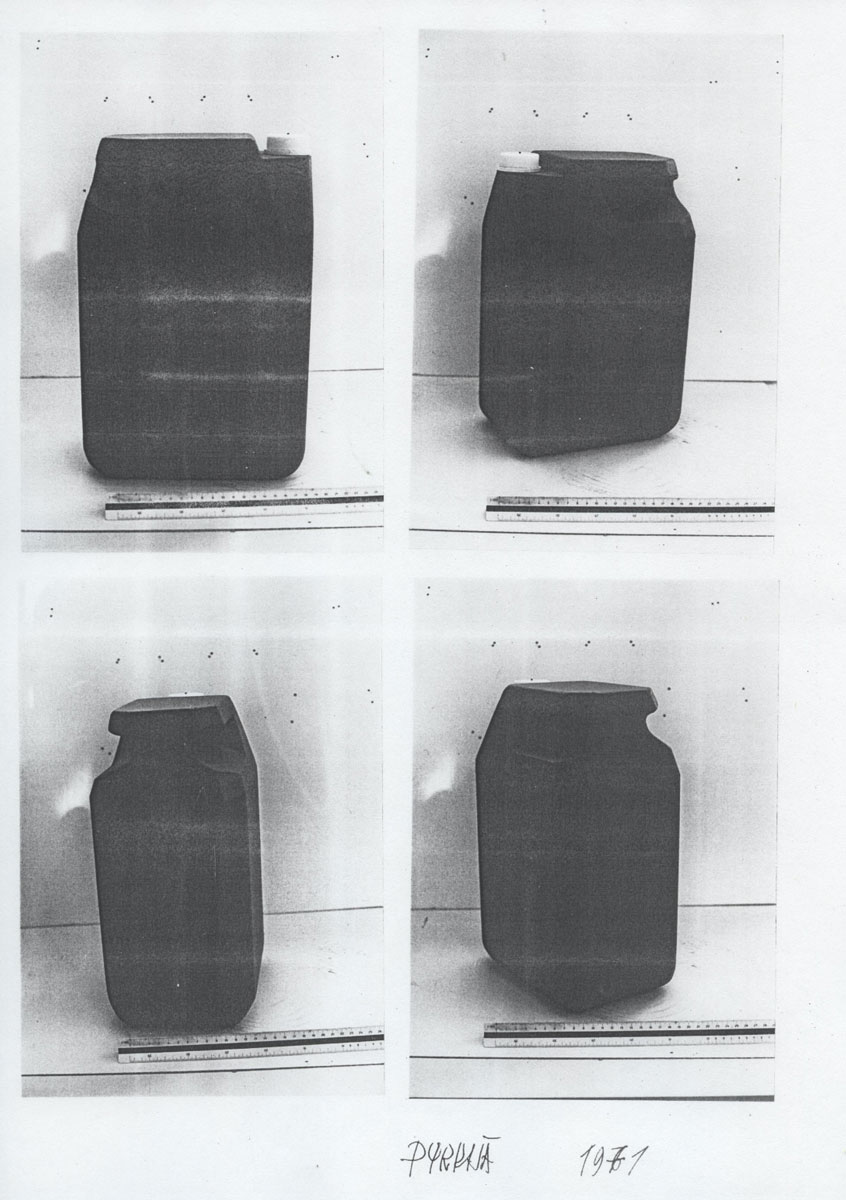
Now imagine running out of gas in the middle of nowhere, forced to draw down the few liters of petrol stored in the jerrycan you had the foresight to place in your car's trunk before heading out (a crucial stockpile without which you—being such a well-prepared, forward-thinking, and risk-averse type—wouldn't even consider leaving the driveway). Attempting to transfer the contents from cannister to fuel tank, you manage a trickle easily enough, but tilting the can forward to accelerate the process causes the stuff to glug and belch, consequently missing the mark and making a complete mess of your shoes. After several minutes of struggle, exasperated again (as you all too often are when confronted by poorly conceived products), you resort to violence, puncturing the roof of the can a few inches from the opening of the spout, remedying the problem with a well-placed airhole to facilitate appropriate flow. Of course, your clever intervention makes the can useless for safely transporting petrol thereafter. So, back at your in-home office, you install yourself at the drafting table (computers are scarcely a thing yet, never mind desktop models and laptops, which are decades away), and you design a new can with a secondary screw-top just like the primary spout but smaller, to be unsealed during pouring and resealed during storing, and your boxy, red, two-snouted plastic jerrycan becomes a runaway international bestseller, so famous and yet so obviously sound in its conception that, like the common spoon, no one even wonders who invented it.
And, just like your better kettle, your ubiquitous jerrycan has been built to last, right down to the molecular level. Ever consider where bright red plastic comes from? Unless you're an industrial chemist or you've previously googled the question and drilled down through a few layers of internet to answer it, you may be surprised to learn that plastic is, in fact, oil. At least, the process of producing plastic starts with the extraction of crude oil—the stuff pumped up from the ground—which consists of a plethora of compounds that vary depending on the source. The crude is then distilled at a refinery into "fractions"—different, uniform hydrocarbon molecules, some of which may be further processed to produce plastic "feedstocks" for everything from synthetic fibers to fertilizer to paint to impermeable vessels like your jerrycan.
Plastic petrol cannisters, made of high-density polyethylene (HDPE), have a half-life somewhere between 230–280 years (like common beverage containers) and 4600–5500 years (like contemporary plumbing pipes) if disposed of by land burial, as in a waste landfill, where they remain dry and hidden from sunlight. The difference in the decay rate of the water bottle and the piping comes down to the thickness of the plastic. Exposure to UV heat accelerates the rate of decay by approximately 25%, whereas marine submersion accelerates the rate of decay by about 75%. Add UV light to marine conditions, as when our trash floats around on the surface of our oceans, and the estimated half-life for the water bottle drops to approximately twenty-six years, and the piping falls to a mere 530 years. Note that this doesn't mean the plastic comprising the bottle disappears in twenty-six years, only that the plastic will be half as thick, overall, in twenty-six years, as it was when you first tossed it out the window or into the trash bin or over the side of your canoe. Assuming your red HDPE jerrycan is half as thick as typical HDPE plumbing pipe, there's a good chance that some bits of it will survive for as long as the stone temple at Karahan Tepe already has. Unlike the benign disintegration of stone temples, however, the slow degradation of the billions of metric tons of plastic waste we're generating on the order of an additional 57 million tons per year is rapidly reducing the potential of our ecosystem to sustain many lifeforms, including our own, for another 13,000 years, when our descendants might otherwise be able to make an empirical comparison.
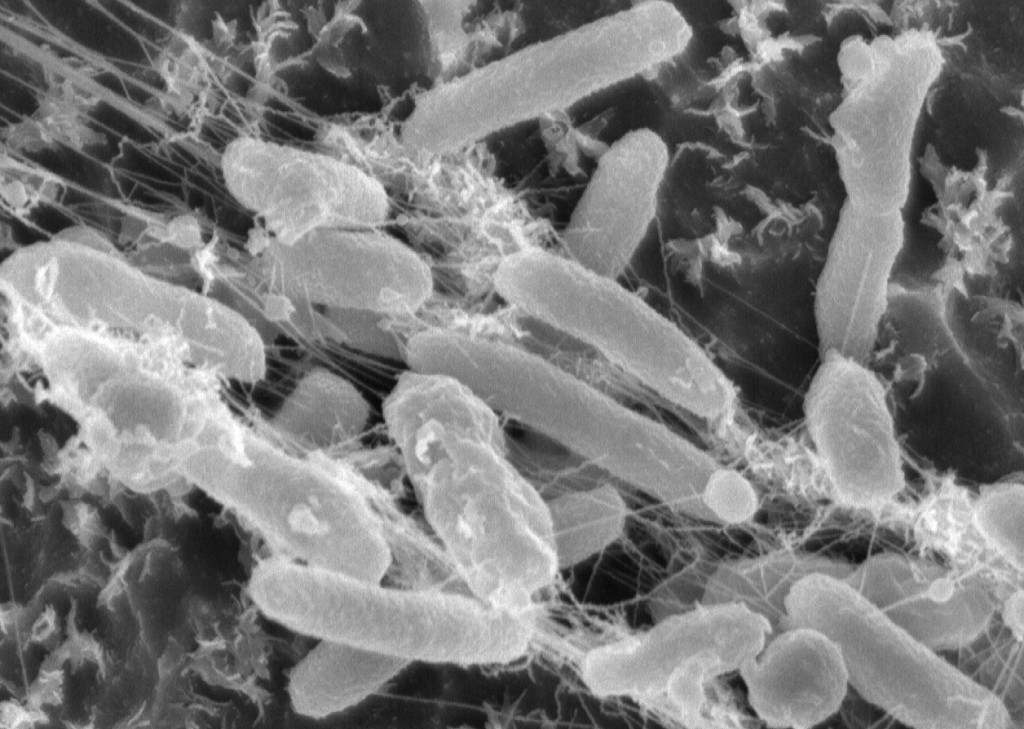
The deliberate and accelerated unmaking of plastic is a relatively vague business compared to its making, because thus far there's been way less money in turning jerrycans, Tupperware, toothbrushes, stepladders, sneakers, drink bottles, shopping bags, Astroturf, auto interiors, wall-to-wall carpeting, computer keyboards, phone cases, plumbing pipes, cigarette filters, credit cards, action figures, bicycle seats, and the lion's share of our clothing back into crude oil. Until recently, the answer to the question of how plastic is safely unmade was a nervous laugh followed by an abrupt change of subject. However, scientists are now frantically studying a family of microbes evidently willing to consume plastic waste and diligently working to cultivate them for the purpose. Researchers in India have found that a strain of the bacteria Pseudomonas is able to bond to HDPE in marine environments, achieving the equivalent of four years' worth of degradation in a period of just thirty days, while other bacteria have already proven themselves reliable consumers of oil, such as Alcanivorax borkumensis, which famously metabolized the billion liters spilled into the Gulf of Mexico after the 2010 Deepwater Horizon disaster.
Meanwhile, our enthusiastic proliferation of kettles and jerrycans continues to convey that we are part of a unified and unifying belief system that defies time and ecology. Our global economy is premised on making things that physically endure for hundreds or thousands of years longer than they could possibly remain useful (or perhaps even comprehensible) to future civilizations. The plastic jerrycan and the ordinary electric kettle may turn out to be our civilization's Karahan Tepe. What then will be our message for the ages?