MMDC3
Here's what we did.
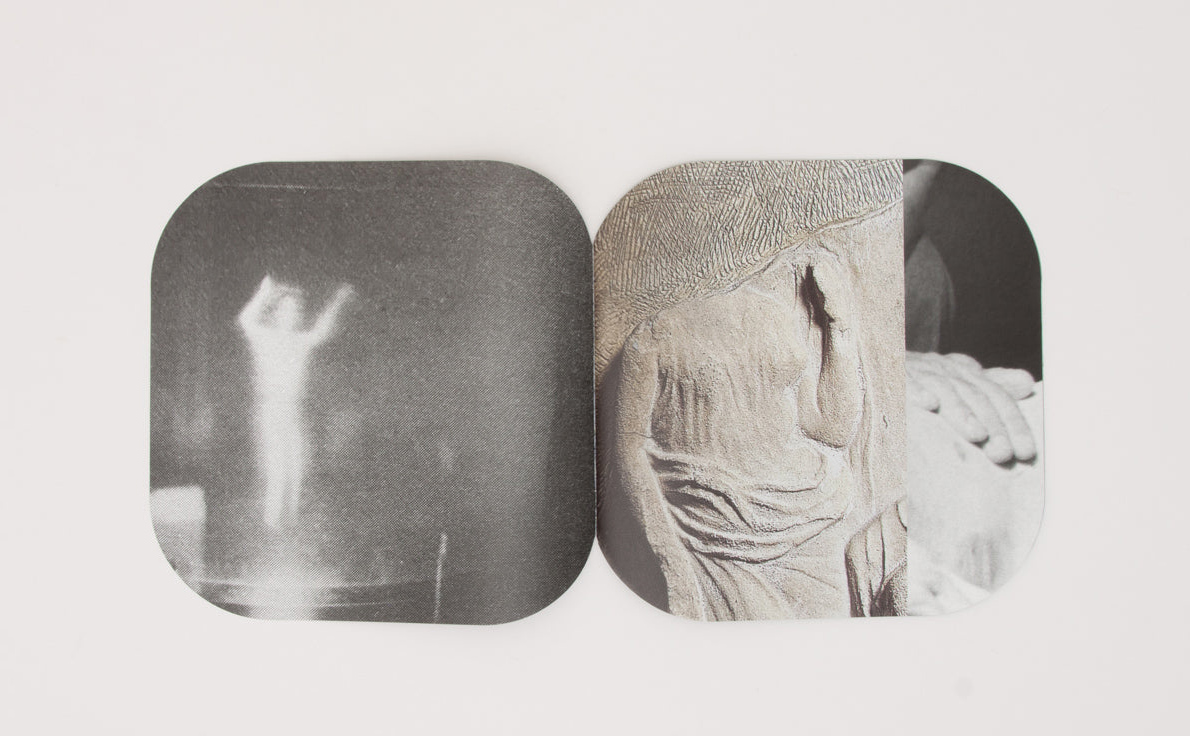
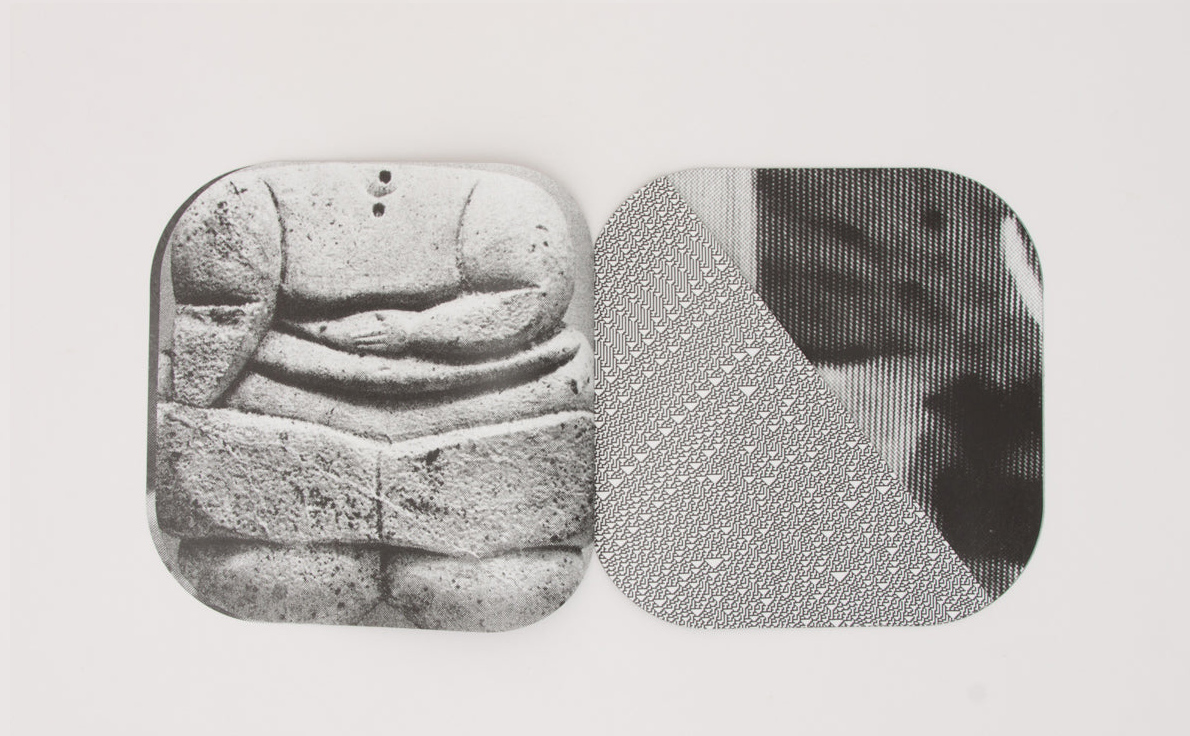
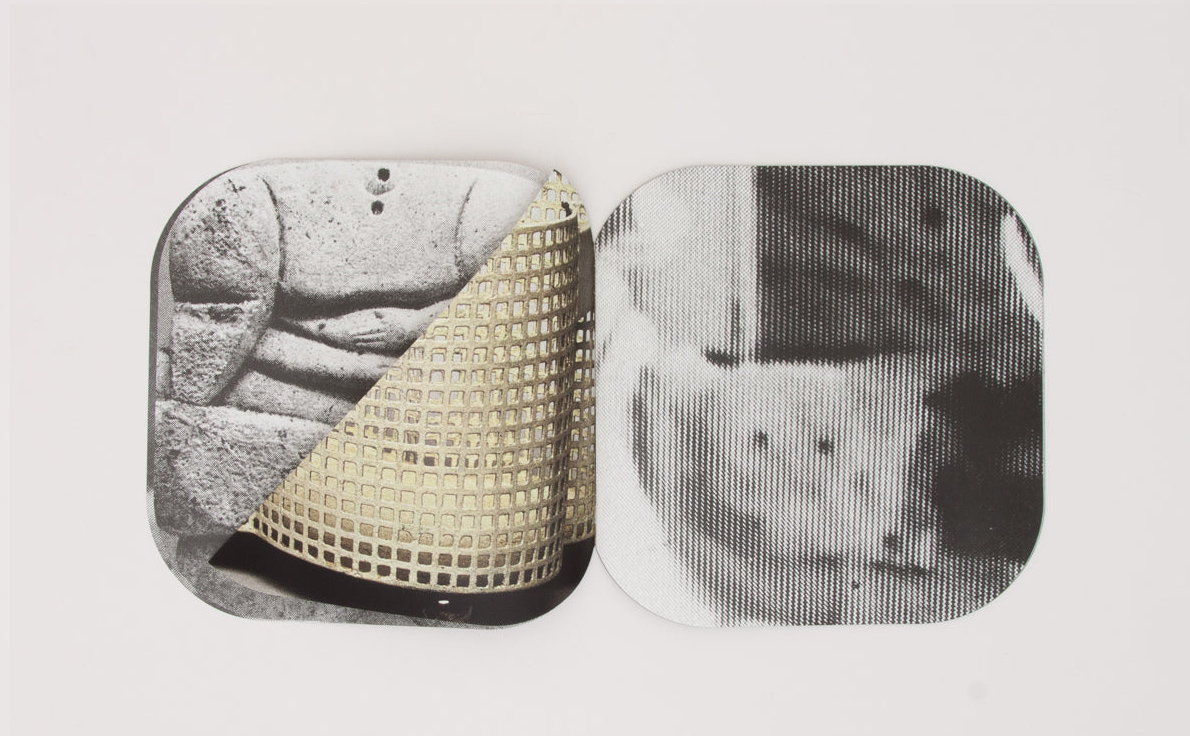
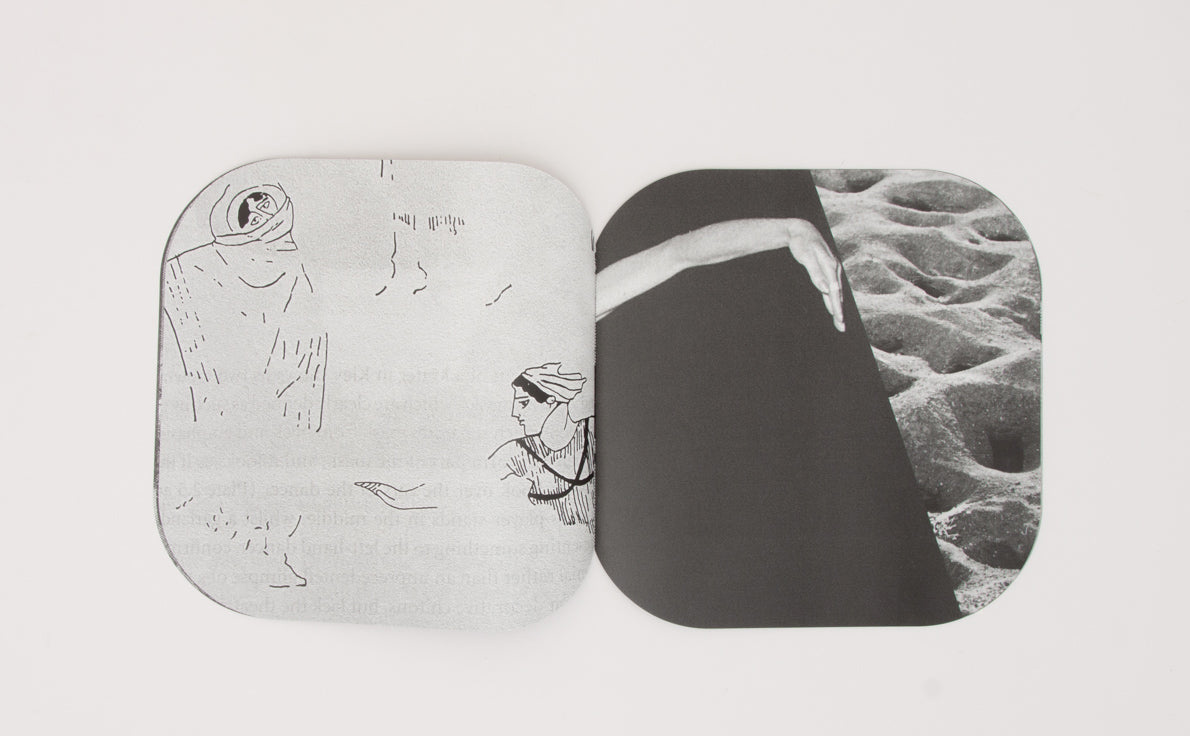
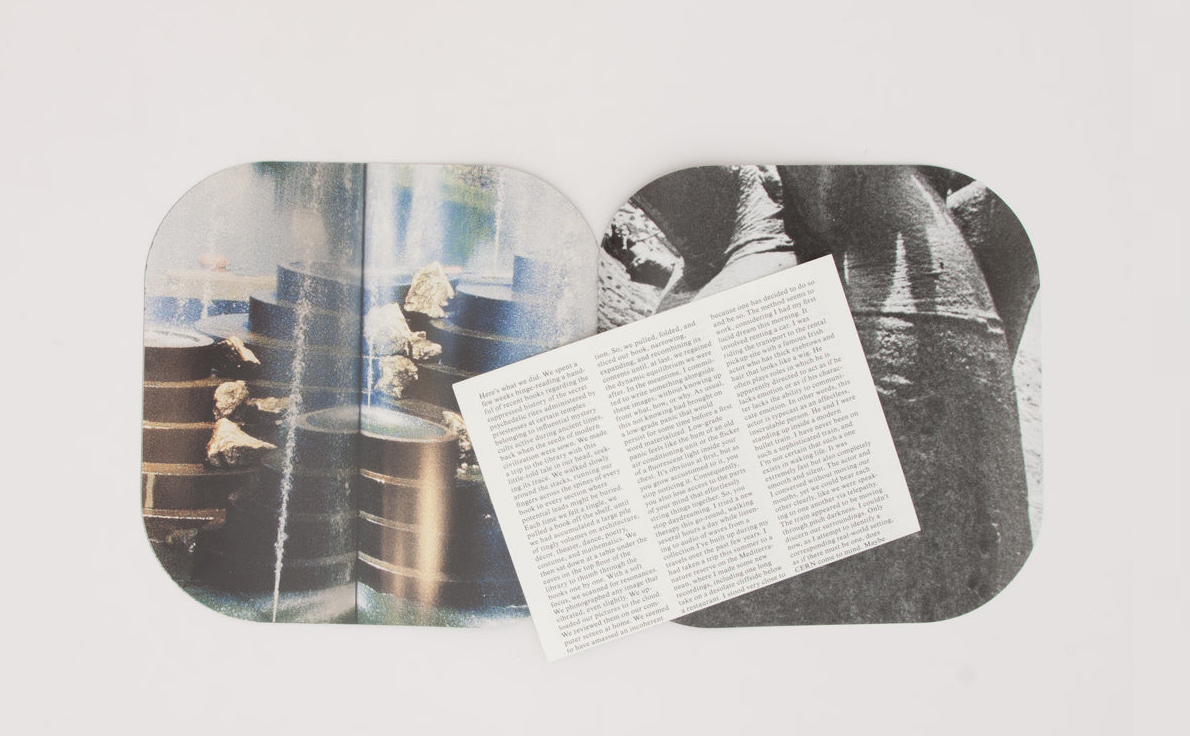
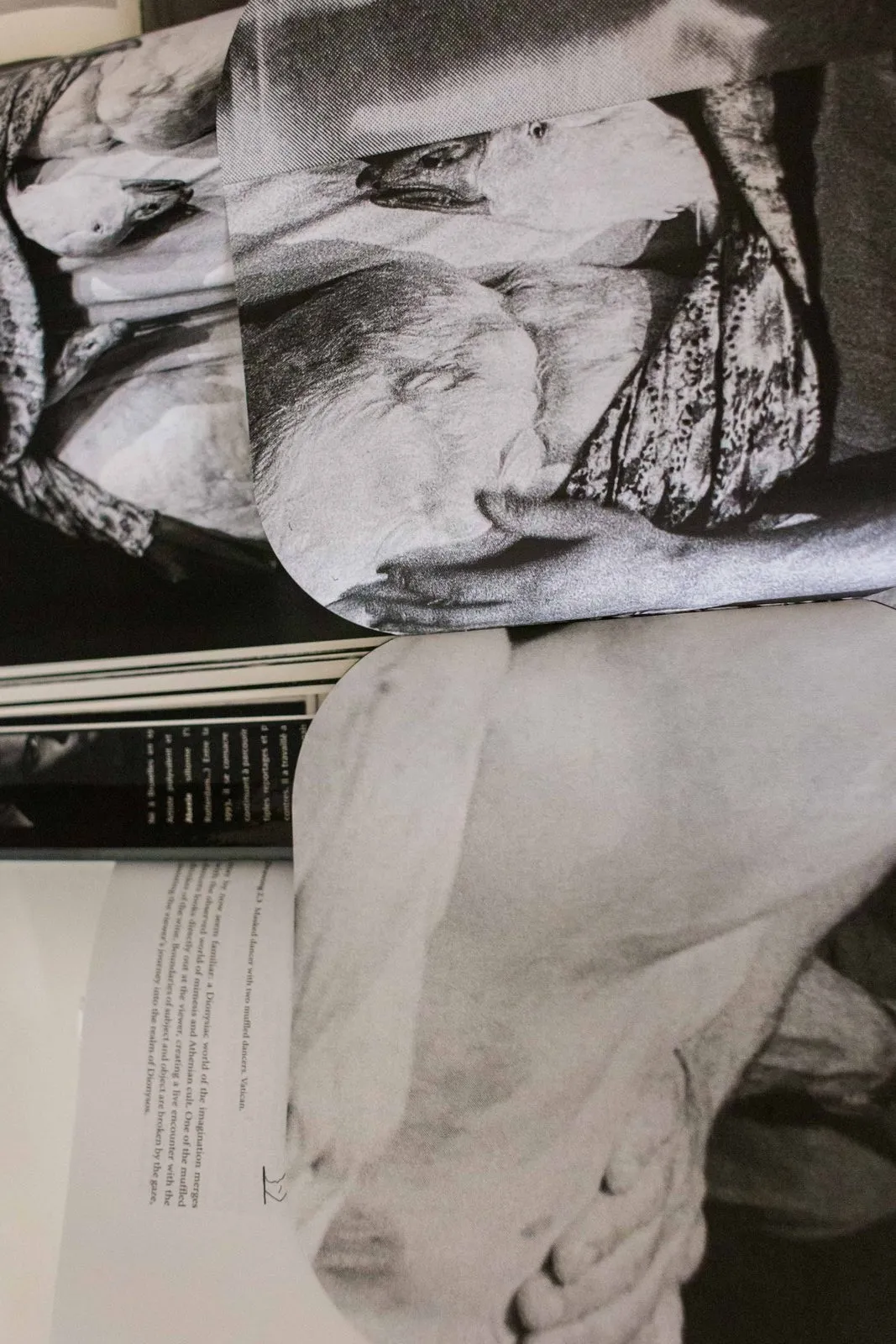
We spent a few weeks binge-reading a handful of recent books regarding the suppressed history of the secret psychedelic rites administered by priestesses at certain temples belonging to influential mystery cults active during ancient times, back when the seeds of modern civilization were sown. We made a trip to the library with this little-told tale in our head, seeking its trace. We walked slowly around the stacks, running our fingers across the spines of every book in every section where potential leads might be buried. Each time we felt a tingle, we pulled a book off the shelf, until we had accumulated a large pile of tingly volumes on architecture, décor, theater, dance, poetry, costume, and mathematics. We then sat down at a table under the eaves on the top floor of the library to thumb through the books one by one. With a soft focus, we scanned for resonances. We photographed any image that vibrated, even slightly. We uploaded our pictures to the cloud. We reviewed them on our computer screen at home. We discovered that we had amassed an incoherent collection of pictures from unrelated books. We returned to the library, seeking clarity. Maybe a few more hours of panning and sifting would render gold. Our archive doubled in size but remained a disconnected jumble. Too many variables. Too much time spanned. Indefinite parameters. Insufficient data. Or perhaps we just weren't looking closely enough. At maximum zoom, we rediscovered the tingle on the level of the pixel and the Ben-Day dot. The problem, all along, had only been a matter of framing. We experimented with magnified pairs and sequences until we could again sense the story on the tip of our tongue. We sent our enlargements to print, believing our work was done. But when our book returned from press, we found that our story had slipped away once more, this time through the crack between screen and page. On paper, "two things side by side" turned out to be a tantalizing but inadequate conjuring trick. The frame had reasserted itself as mere opposition. So, we pulled, folded, and sliced our book, narrowing, expanding, and recombining its contents until, at last, we regained the dynamic equilibrium we were after.
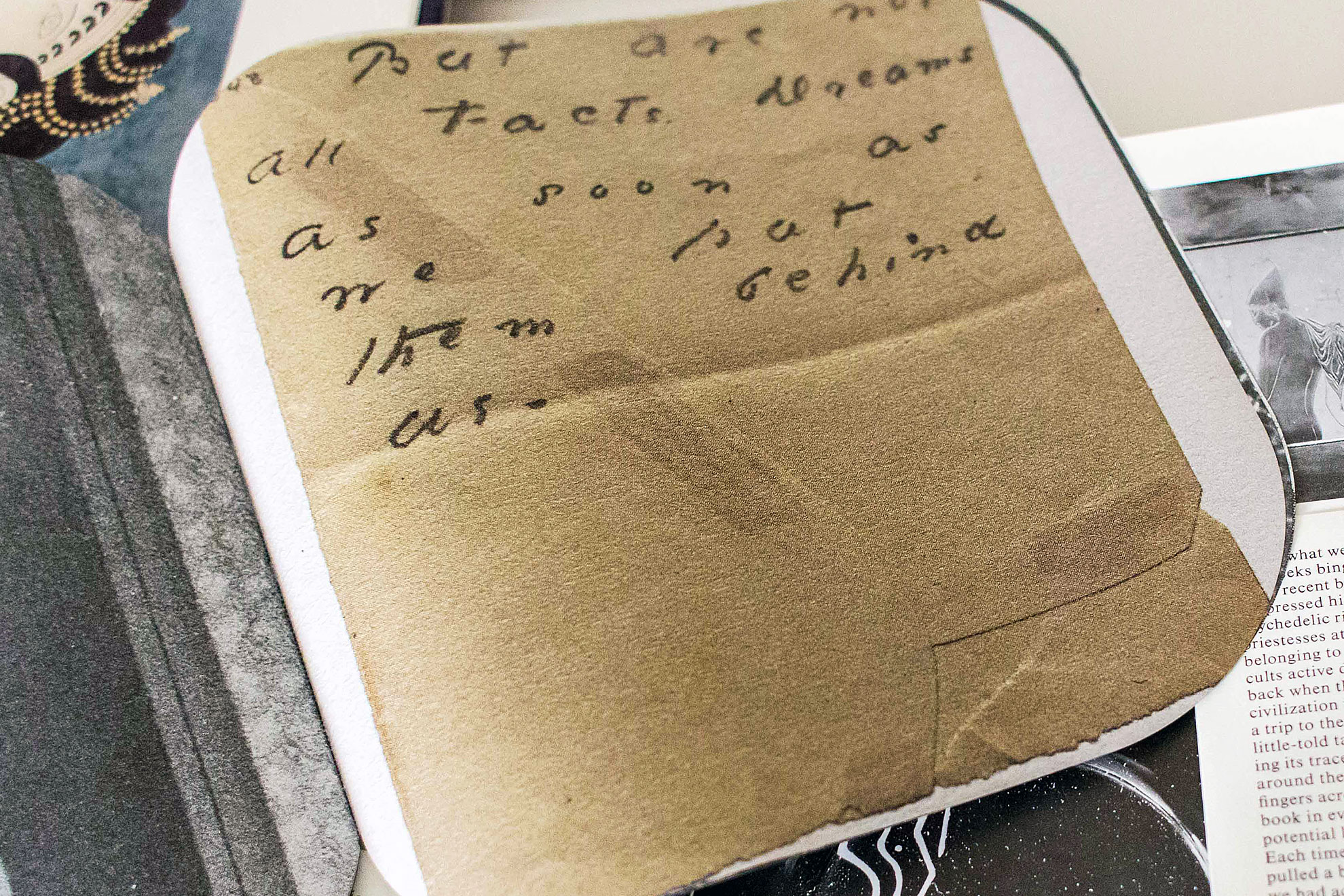
In the meantime, I committed to write something alongside these images without us knowing up front what, how, or why. As usual, this not knowing had brought on a low-grade panic that would persist for some time before a first word materialized. Low-grade panic feels like the hum of an old air conditioning unit or the flicker of a fluorescent light inside your chest. It's obvious at first, but as you grow accustomed to it, you stop noticing it. Consequently, you also lose access to the parts of your mind that effortlessly string things together. You stop daydreaming. I tried a new therapy this go-round, walking several hours a day while listening to audio of waves from a collection I've built up during my travels over the past few years. I had taken a trip this summer to a nature reserve on the Mediterranean, where I made some new recordings, including one long take on a desolate cliffside below a restaurant. I stood very close to the sea there—a violent, relentless sea—where I was largely protected from interference (screaming gulls, children, fellow tourists) by the intimidating setting. I had been recording for a solid ten minutes when someone from the restaurant above abruptly slammed shut the lid of a garbage receptacle a few meters behind me. The dumpster clang turned out to be far less problematic in the recording than it had been in real life. Unfortunately, I didn't learn this until after I had already stopped the recording to check the playback, assuming it had been ruined by the interruption. At that point, it was too late to start another lengthy take. While listening to this thwarted track on repeat, walking in circles around town over the past few dry autumn weeks, I attempted to train myself in the skill of lucid dreaming. As I understand it, training oneself to dream with lucidity is a matter of convincing oneself that one is empowered to remember one's dreams or to be a semi-conscious agent while dreaming, simply because one has decided to do so and be so. The method seems to work, considering I had my first lucid dream this morning. It involved renting a car. I was riding the transport to the rental pickup site with a famous Irish actor who has thick eyebrows and hair that looks like a wig. He often plays roles in which he is apparently directed to act as if he lacks emotion or as if his character lacks the ability to communicate emotion. In other words, this actor is typecast as an affectless, inscrutable person. He and I were standing up inside a modern bullet train. I have never been on such a sophisticated train, and I'm not certain that such a one exists in waking life. It was extremely fast but also completely smooth and silent. The actor and I conversed without moving our mouths, yet we could hear each other clearly, like we were speaking to one another via telepathy. The train appeared to be moving through pitch darkness. I couldn't discern our surroundings. Only now, as I attempt to identify a corresponding real-world setting, as if there must be one, does CERN come to mind. Maybe that's because I wrote the word "discern" a moment ago. Or maybe we were indeed traveling through the underground tunnels of a particle accelerator in the Swiss Alps on our way to pick up a compact sedan. I was carrying a mostly empty light blue canvas duffel bag with white handles that looked to be a vintage item from the 1970s or '80s, when I was a child. It was sun-faded. I wonder now what was in it.
The last time I flew across an ocean, I watched a Korean sci-fi movie set in the not-too-distant future, starring this same Irish actor. It's about a gentle live-in childcare provider, a young Chinese man, who is actually an AI. At the beginning of the film, this tender nanny begins to break down during a virtual dance-a-thon involving the whole family—mother, father, adopted daughter, and him. Imagine you're seeing cutaways of multiple households of two to eight or more people of various ethnicities, genders, and orientations in various spatial configurations, all dancing their asses off in various living rooms or in front of virtual backdrops. The implication is that these motley dance teams are simultaneously responding to some sort of live, global dance prompt before some sort of automated judge ranking their performances in real-time. Text displayed on screen indicates how many tens of thousands of families are participating. You see the number dwindle as the dance continues and legions of losing households presumably fall away. When the family at the center of the story is finally eliminated from the dance-a-thon, the dance music ends, and the humans, breathless from their vigorous efforts, stop dancing, but the AI caregiver keeps burning up the floor like the impressive dancing machine that he is. That's when the family initially notices that he may be malfunctioning. The actor on the bullet train of my dreams plays the quiet, pent-up father who, in the course of seeking aid for the ailing AI, pieces together the machine's long past after uncovering encrypted archives of recorded memories buried deep within the now-defunct AI's system. The memories reveal the AI's burgeoning sense of the mysterious and transcendent emotional truth that is love. In a wakeful state following this morning's lucid dream, I resolved to stop worrying my own hand and mind about this text. I made coffee, then procrastinated by reading yesterday's news. I watched the control room video of the engineers who successfully steered an unmanned spacecraft into an asteroid approximately 11 kilometers from Earth to test whether it may be possible to alter the trajectory of a large celestial body on a collision course with our planet, and thus save ourselves from doom. Like in the movies. "It's looking pretty good," one of the engineers whispered, cautiously hopeful, as the live video image of the asteroid transmitted by the spacecraft to the control room grew larger and larger over several seconds, until the asteroid filled the frame completely, before the feed suddenly disappeared in a white flash, when the machine and its camera were both destroyed upon impact with their target. The engineers jumped and cheered and hugged one another. Many covered their mouths with both hands as if to prevent their elation from escaping while they gasped and cried joyously. I cried, too, even though it was just a lo-res recording, and I already knew from the headline how it would end. When people attempt something difficult at which they may fail, the anticipation they feel as the moment of truth approaches, and, subsequently, the release of intense, pent-up emotion following their daring leap of faith, can also be felt by those who witness it. Mirror neurons? I have felt a similarly invigorating mix of emotions—excitement, dread, and awe—from time to time, with or without other people present, when in certain architectures, or at most cliffsides, or in front of certain fountains, occasionally while reading a book or glimpsing an image, when observing scientists succeed in service of humanity, and more than once or twice while watching dancers move.