Old Gold
One morning a few months back, before winter officially gave way to spring but sometime after the anticipated date of transfer had passed, I drove to a nature conservancy near my house, laced up my snow boots, and set out across the broad field that connects the parking lot to the trails.
For Kara Hamilton
Why should I worry about the money? The money is always around to be had. The main thing is to have an idea. A plausible idea which can be dressed up and sold.
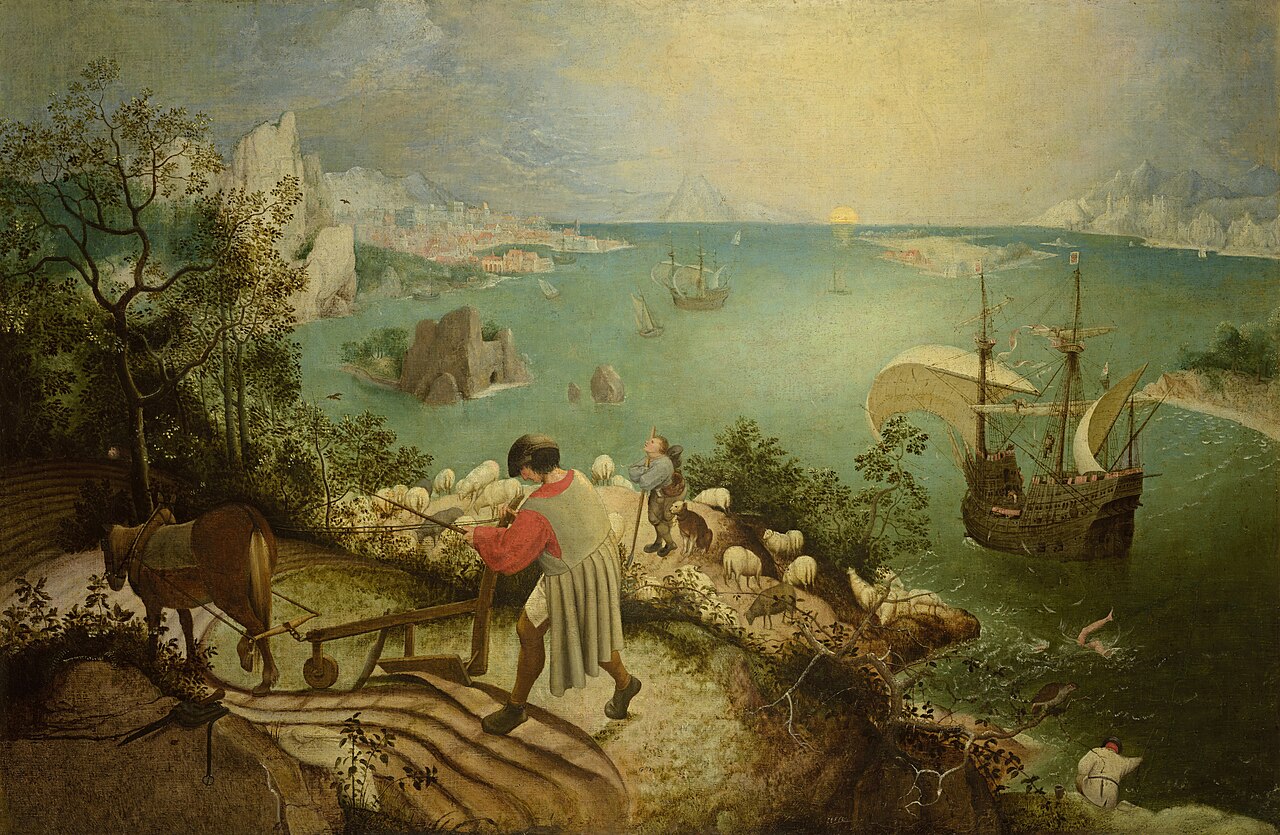
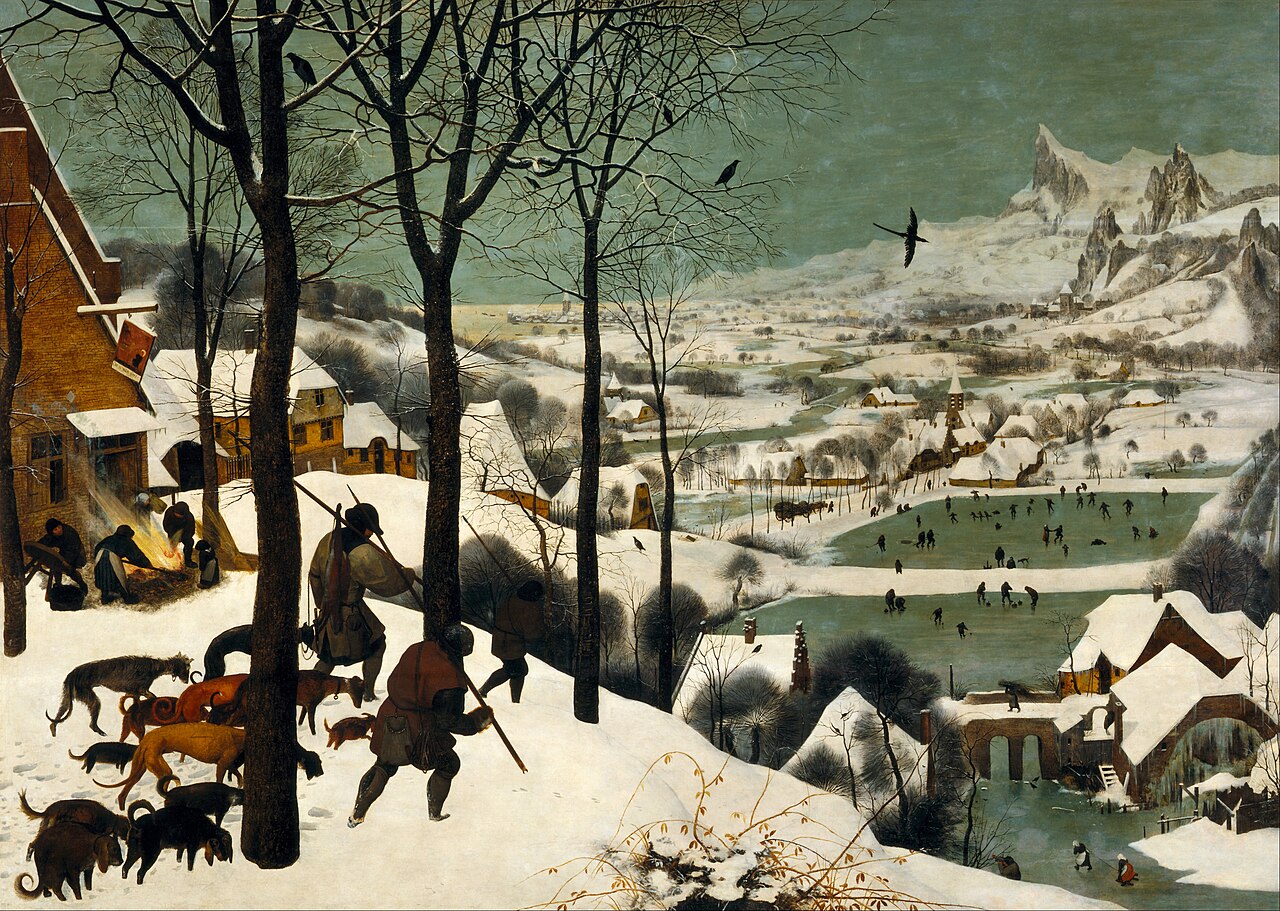
The day was sunny and warm, but the preserve was still covered with snow and ice leftover from what at the time seemed to be an endless season. The walk verged on a trudge, despite the fact that the trails were thoroughly trodden by other people and animals. I soon found it necessary to remove my heavy coat so as to continue the trek in short sleeves. At the first fork, which divided the trail to the “overlook bench” from the trail to the “picnic gazebo,” I headed in the direction of the latter, at least according to the footprints of those who had gone before me, since snow had made any other path indiscernible. Naturally, I arrived at the overlook bench some minutes later. That morning, I had departed my house on the lam from a case of blankness extending several days. Anywhere I might have arrived, particularly some un-intended place, was destined to become an answer in what amounted to a blind search for fate (fate being tantamount to inspiration in my personal economy). I sat down on the bench and looked over the edge of the overhang, over the landscape, over the river toward the mountains, overseeing a complete overview of that small section of the world. I was reminded of Bruegel’s Landscape with the Fall of Icarus—the painting of the hunters in the snow and little Icarus upside down in the frozen lake below. To “overlook” something is to miss it altogether (that is, to overlook something inadvertently). Or it is to purposely disregard some issue or detail (as in, I overlook your bad behavior because you’re my guest, or because I find you handsome, or because you helped my grandmother with her plumbing years ago). It must be confusing to non-native speakers that an overlook invites the opposite of overlooking. A “lookallover” would be a more logical name for this sort of place.
The overlook bench itself was made of tree branches whimsically wrapped around a plank wood seat configured in a semicircle, as if it were constructed by hobbits, or by set designers for a movie about fictional characters who live in the glen under mounds of earth in adorable homemade cottages fitted with druid-inspired trims. When I stood up from the bench after several minutes of attempted inspiration, I observed that people inscribe things there. They write their own names or their initials, along with their lovers’, inside of hearts, and so on. Apparently, visitors come to look over the vista then pull out their pocketknives and set to work marking the occasion, overlooking the landscape, but commemorating the moment with the first thing that comes to mind, that thing never far from the mind, but not the same as it, either: one’s identity. I wondered about the cave artists of Lascaux. Did they have names? Maybe they didn’t have names, and maybe that partly explains why their pictures convey more dramatic tension than our bench graffiti. (Subsequently, and for no related reason, I learned that the “problem” of proper names was indeed an impetus for the shift from pictographic writing to syllabic then phonetic sign systems; it is challenging if not impossible to come up with and recall a distinct picture to represent every proper name.) As I turned to leave, a glint caught the corner of my eye from underneath the far end of the bench. I squatted for a closer look and discovered not a magical treasure, but the ripped and discarded gold foil packaging of a Trojan Magnum.
When I returned home, I looked up the painting and discovered that I had conflated Bruegel’s Icarus with his Hunters in the Snow, two separate paintings depicting two separate seasons, with action oriented in two separate directions: right to left (Icarus, plowman, summer); and left to right (Hunters, dogs, winter), which seemed a perfectly appropriate response, given the indecision of the weather, but also disturbing, in that way it’s usually disturbing to realize after some minor, inadvertent cognition your mind is not an “I,” but an “it” that generates an “I” for expediency’s sake.
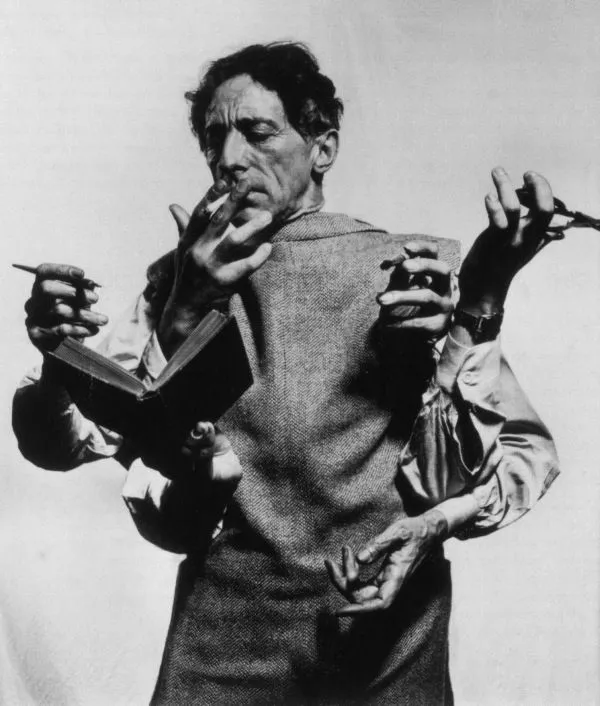
There’s a famous portrait of Jean Cocteau with too many arms that illustrates the idea well. He’s wearing a tweed jacket sleeveless and backwards, his head evidently at the mercy of a disparate tangle of limbs. I won’t say the mind is at odds with the body, because each of the parts are mind and body, but the arrangement suggests that limbs, given more mind or greater numbers, could readily unite in mutiny against the head. In Cocteau’s case, the head is trying to read and smoke. Some of the limbs—the three right hands—are on board. One holds an open book, another a pen, and a third presses a cigarette to the lips. But the left side is poised to distract. The middle hand grasps a pair of scissors while the other two gesticulate above and below it. Reader, writer, smoker, insect, head twisted front-to-back, the man in the photo is built for multitasking, but not for clarifying or for navigating. In an interview with the Paris Review, Cocteau said, “I feel myself inhabited by a force or being—very little known to me. It gives the orders; I follow.” And later, in a fitting caption to a thoroughly vandalized overlook bench: “Appreciation of art is a moral erection; otherwise mere dilettantism. I believe sexuality is the basis of all friendship.… This sickness, to express oneself. What is it?”
The fundamental calculation of the animal brain is risk versus reward. That is, brains evolve to improve organisms’ odds of surviving risks and reaping rewards. Or, organisms with more evolved brains tend to outwit those with less evolved brains, and thus survive to reproduce, with notable exceptions, such as mindless microorganisms who might disturb some vital supply (water, food, light) of a more advanced animal and thereby threaten its survival, or humans, who are brain-endowed for a long view, yet short-sighted in practice, with an unfortunate propensity for compromising the biosphere.
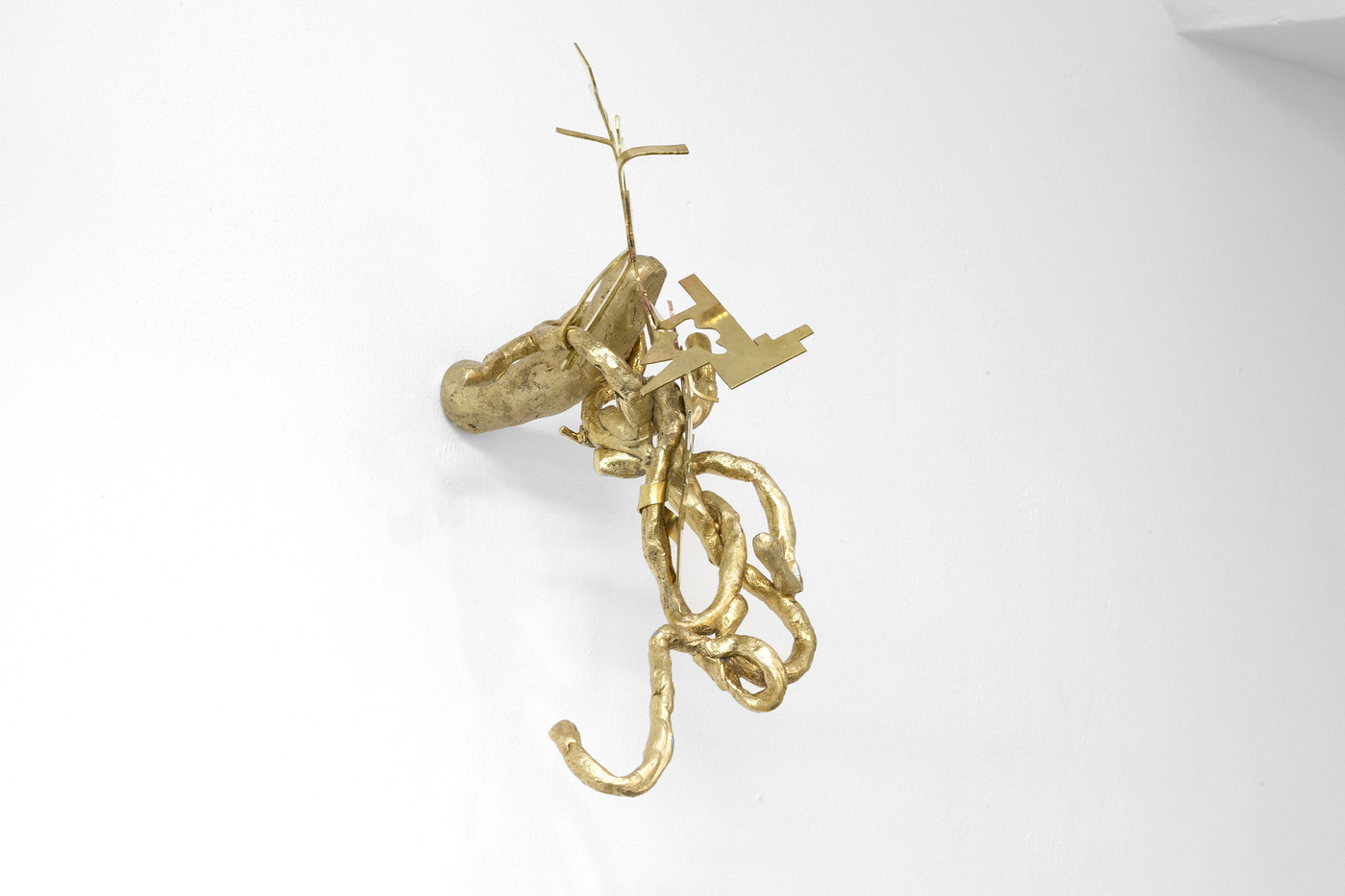
The concept of an instinctual, biological correspondence between risk and reward is symbolically embedded in all sacred artifacts. “Precious” materials require a requisite effort, expenditure, or risk to procure or produce. Among the oldest artifacts are 100,000-year-old beads made of seashells. The ancient shells have been found in three locations, each one far from the nearest sea, indicating that they were transported some distance after they were obtained, in which case they would indeed signify a certain effort, expenditure, and risk rewarded—messages jewelry transmits to this day as a symbol of status, wealth, sexual desirability, and, ultimately, power. Considering that our oldest evidence of any written language is only about 5000 years, an amulet communicated good fortune ages before the advent of marketing or even stone tablets. Its statement was (is) universal and transhistorical. Apparently, the advertising tropes that “diamonds are forever” or gifts of jewelry are “timeless” contain a degree of anthropological truth.
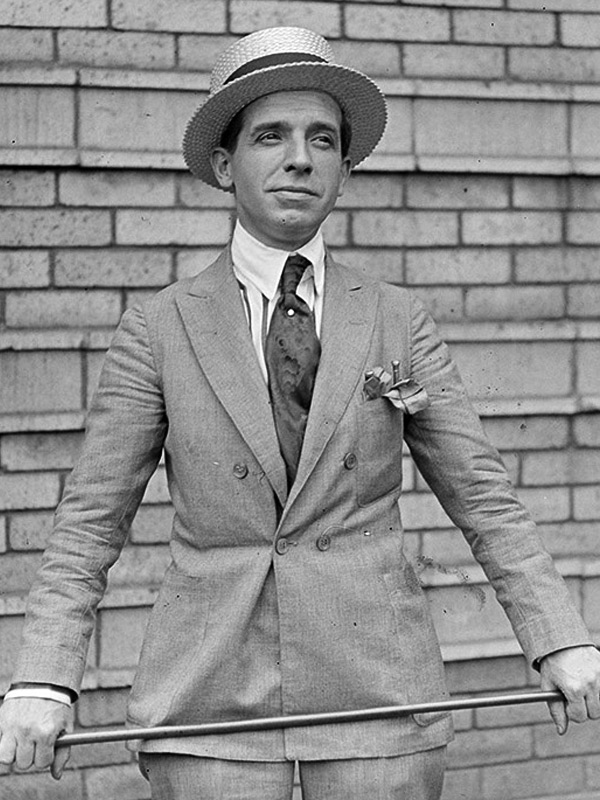
A few centuries ago, a small band of warlords ritualistically transferred both risk and reward in the form of a precious emblem conferred upon the one among them who credibly threatened to defeat the rest by force, henceforth their “king.” It’s difficult to imagine that once upon a time (only a blink ago compared to the ingenious inception of beads), there was no such thing as a king. Crown jewels may have initially symbolized the relinquished power of a few, willing subjects—that their submission to the rule of an agreed leader would be preferable to continued strife, battle, damage, bloodshed, etc., among all contestants—but the authority of the monarchy soon took up a narrative force entirely its own, refuting any progenitor other than God, who, of course, was not to be reached for comment. Professional swindler Charles Ponzi’s “plausible idea dressed up and sold” is little more than a machine-stamped, silver-plated nickel charm compared to the concept of royalty and the loot (not to mention the mystique) its authors consolidated over generations—though the preceding history is partial conjecture based not on certified knowledge but on a visit to the underbelly of the former summer palace of the Danish royal family in Copenhagen, where several centuries’ worth of crown jewels are entombed in glass cases for the close-up consideration of a museum-going public.
Old crowns don’t look like the sort of polished costume that handsome, beagle-eyed actor Peter O’Toole would’ve worn in a tragic period drama about an aging royal. They are quite evidently hand wrought. And what might be interpreted (since the dawn of machine tooling) as their amateurish charm, is undermined by the tawdry excess of gem-y bits and bobs encrusting their surfaces. It hadn’t occurred to me before I descended into the palace that metal and precious stones are beyond dead, or that this is what “inorganic” means. There I saw for myself that elderly jewels are even more deathly than your average stainless steel implement. After a few generations’ wear and tear, hard, shiny objects, including noble accoutrements, acquire the look of butter stored at room temperature. A crown’s sum potential energy inevitably melts into imminent, oozing collapse.
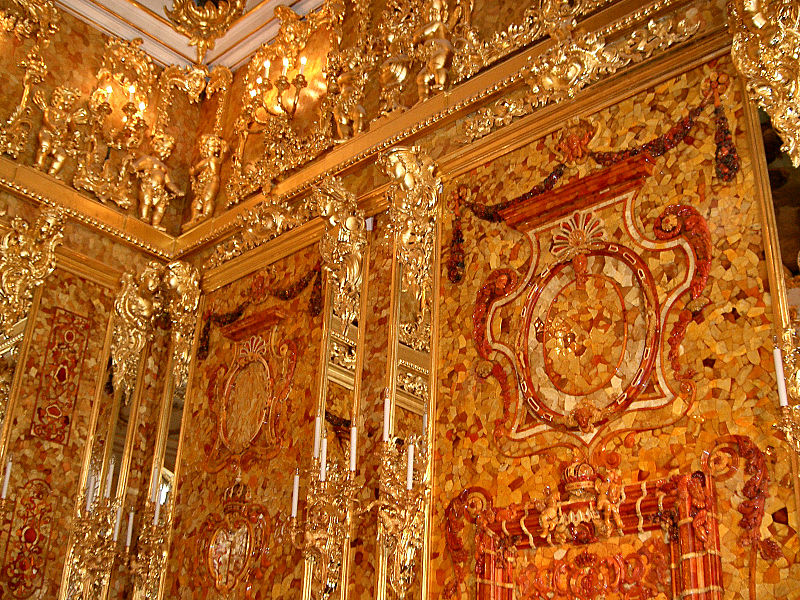
You have been unconscious for some time when you become aware of a steadily fading rhythm. The percussive pace gradually dims as it is replaced in your mind’s eye by the shape of footsteps receding across a stone floor in a distant chamber. By the time you finally awaken to the fact that you have been asleep, the sound has disappeared. The darkness behind your eyes shimmers with the orange-black of afternoon sun pressed through the lids. You blink rapidly, absorbing a first, brief shock of light reflected off a plaster ceiling high above you then instinctively squeeze your eyes shut again. Squinting now to allow your pupils to adjust to the room’s brilliance, you realize that you are flat on your back, not under the sky, but in the middle of a wooden floor in a room that appears to be carved from solid honey. A bath of opaque white sunlight enters through a rear wall made entirely of windows, but falls short of the resin surfaces on the room’s other three sides. Only the narrow vertical columns of mirrored glass that separate the intricate golden panels capture the cool light coming through the windows, tossing it from side to side, back and forth across the room like a single glint refracted in a box of blades. Incandescent sconces fashioned after candelabra spread a synthetic yellow cast over the rest.
As you stand up, your limbs lighten toward tips and toes. Gravity has taken on the quality of an ombré weaving, drawing your head and chest in the direction of the ceiling, though you still adhere to the floor. Below your feet, the finest marquetry technique has been applied at the scale of a room in shades and curves that resemble a French formal garden imposed on some vast plot of dry, infertile earth, while the walls around you seethe with an erotic, vegetal display, though the golden cherubs, fronds, vines, leaves, and women’s heads add no more life to the room than the simulated candlelight adds smoke and flame.
You observe that the walls are made entirely of multi-hued amber pieces flattened and melted together like used chewing gum, though each piece has been carefully modeled to resemble the leaf of a ginkgo tree, or a fish scale—elegant and repulsive, at once. A few feet away from where you’re standing, a small, filigreed table is attached to the corner of the room, poised there on a single, turned leg like a prostitute amputee. The table holds a reluctant clock face buried among black and gilt leaves. Time passes through it like liquid squeezed back and forth inside a balloon.
Several ornate frames built into wall panels line the room. Some contain additional, inset frames and swags topped by regal crowns and supported by mythological figures, chariots, soldiers, swords, voluptuous amphibians, and papery flowers, every mechanical and anatomical detail sculpted in amber. The frame directly in front of you surrounds a Florentine mosaic assembled from quartz, jade, onyx, and other stones, one of four pictures that punctuate the room like clear eyes in a world-worn face. Each depicts a different sensory perception, except this one, which doubles as an allegory of touch and smell. Two couples frolic among classical ruins. One companion strokes another’s face. A third holds a flower under a fourth’s nose.
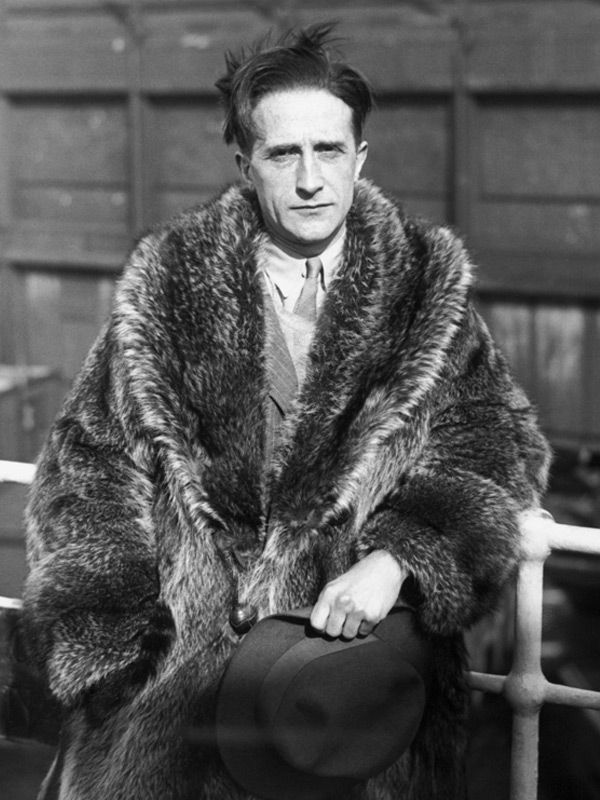
Marcel Duchamp was a reluctant correspondent—a point he made abundantly clear to the receiving ends of his mostly brief letters (e.g. “… writing’s a pain in the ass for me,” “I reproach myself every single day for taking so long to reply,” “I tried to … convey my writing paralysis to you as an explanation for my long silence.”)—yet he somehow managed to write hundreds if not thousands of notes and telegrams during his lifetime, a selection of which were translated from French to English and published over a decade ago. Perusing someone’s correspondence without his permission is ipso facto uncouth, akin to rifling through an intimate’s email outbox, but for the most part, these letters prove short of scandal, and make for almost shameless reading. Many traipse nonchalantly over significant events of their narrator’s life, as if whatever were happening to him, for better or for worse, might just as well have been happening to a passing acquaintance instead. The most impassioned bits of the published letters involve, on the one hand, ideas for new works and/or assorted schemes for gaming various systems, and, on the other, occasional rants against the unleashed “fakes and crooks” running in and around the “Art game.” It’s a curious split.
One longer than average note from autumn of 1922 begins (after brief niceties) like a missive from the representative of a recently displaced Nigerian prince: “There’s a possibility of a big project which might well make some money.” Duchamp, who is thirty-five years old at the time, is writing from New York to his friend Tristan Tzara in Paris. He continues,
This would be to have the 4 letters DADA punched or fashioned in metal separately and then linked together by a little chain. Then make a leaflet, just a short one (about 3 pages in each language). In this leaflet, we would spell out the virtues of Dada, basically to get people from the provinces from all different countries to buy the insignia for a dollar or equivalent in other currencies. The act of buying the insignia amounts to a rite of passage to Dada status for the purchaser. We would of course explain to them that there are 3 types of Dada—the anti-Dadas, the pro-Dadas, and the neutral Dadas. But that whatever their point of view, the insignia would protect them against certain illnesses, against many of life’s problems, something like Pink pills that cure anything.
He sketches some further details about the would-be contents of the “mouth-watering leaflet,”— the real “trick” to making the endeavor a “financial success”—including how to wear the amulet and the variety of styles and materials in which it would eventually be made available.
The proposal is a thin and thinly veiled get-rich-quick scheme, designed to exploit either the gullibility or the inextinguishable enthusiasm for novel metal trinkets presumed to flourish among provincial populations. The only real risk Duchamp foresees, “the first and only argument against,” is the considerable expense of putting 100,000 leaflets in the mail.
Duchamp encourages Tzara to share the idea with Man Ray, whom he thinks will “find it amusing,” but there’s no clear indication the scheme is intended as farce, other than the fact that it wasn’t executed. Judging by the contents of the letters overall, Duchamp worried about money most of his life. He stretched to get by for much of it, a feat achieved only with the benefit of inheritance, first from his father, and later following the death of the artist Mary Reynolds, his longtime unofficial partner, who left him with a comfortable monthly income. By then, he was already in his sixties.
In 1922, when Duchamp wrote to Tzara from New York, the country was on the rebound from a short but severe recession, marked by extreme deflation, greatly decreased industrial productivity, and a sharp spike in unemployment. This same recession, when the U.S. stock market was at its lowest point since 1901, was also the backdrop for the rapid rise and fall of Charles Ponzi, who, between late 1919 and 1920, infamously defrauded roughly 30,000 people out of about $15 million (equivalent to over 150 million in today’s dollars) through a scheme that promised to double investors’ money in ninety days.
Ponzi was an Italian immigrant about five years older than Duchamp. He had served time in a Canadian prison on a forgery conviction before drifting south, back to the States, to continue a life of increasingly inventive crime. Judging by his autobiography, which he self-published in the mid-1930s, following his deportation, Ponzi was a pathological liar with no capacity for remorse, as well as a talented storyteller. The Rise of Mr. Ponzi: Autobiography of a Financial Genius stars its author as the hapless screwball hero of a slapstick comedy. His every effort to do good and make good is distorted or thwarted by sinister opportunists. The man was swagger embodied.
Ponzi’s eponymous scheme evolved from a failed attempt to launch a journal. Though the publication never got off the ground (in part because no bank would loan him money), he received an enquiry about it from a European contact. The correspondent enclosed a coupon for return mail, which had been purchased in the sender’s local currency, but was redeemable for a miniscule profit at a U.S. postal office. A light bulb exploded over Ponzi’s head. He started a business called Securities Exchange Company, and soon convinced thousands of people from all walks, including his wife (Rose) and her relatives, to hand over large sums on the promise that he would double their money in a short period of time by investing in the exchange of these international reply coupons. He paid off the initial round of investors in half the ninety days he had advertised by simply passing a second round of investors’ money to them. Word spread (thanks to front-page coverage in the Boston Post and other newspapers), and investors flocked. Many simply folded their “profits” back into the enterprise. Within a few short months, Ponzi even bought the bank that had denied him a loan for the journal. He then offered double the going interest on savings and was soon overrun by depositors. But the bottom fell out just as quickly from Ponzi’s scheme, as well as that of a half a dozen banks, when regulators became suspicious and investors made a run. Ponzi was captured, tried, and convicted in another Ponzi-worthy chapter of this epic tale, but he maintained his innocence until the end of his life, when he half-confessed to a reporter in his Ponzi way, “Even if they never got anything for it, it was cheap at that price. Without malice aforethought I had given them the best show that was ever staged in their territory since the landing of the Pilgrims! It was easily worth fifteen million bucks to watch me put the thing over.” Today, his success as an entertainer remains largely underappreciated. He died in 1949, in Rio de Janeiro, his remains buried in an unmarked pauper’s grave.
Ponzi’s plan was a straight con. Duchamp’s was a possibly farfetched but legitimate business idea to sell metal charms for a fairly low price at a fairly high margin to a fairly large number of people by way of a persuasive pitch. His mouth-watering leaflet wouldn’t explicitly suggest to would-be customers that there was a real-money return to be made directly off an investment in DADA—the amulet only promised good fortune in the figurative, unquantifiable sense—but both were “plausible ideas to be dressed up and sold,” designed to manipulate an investor’s or a customer’s willingness to pursue a talismanic advantage—a hot tip, a shiny trinket—against known odds.